
TL;DR
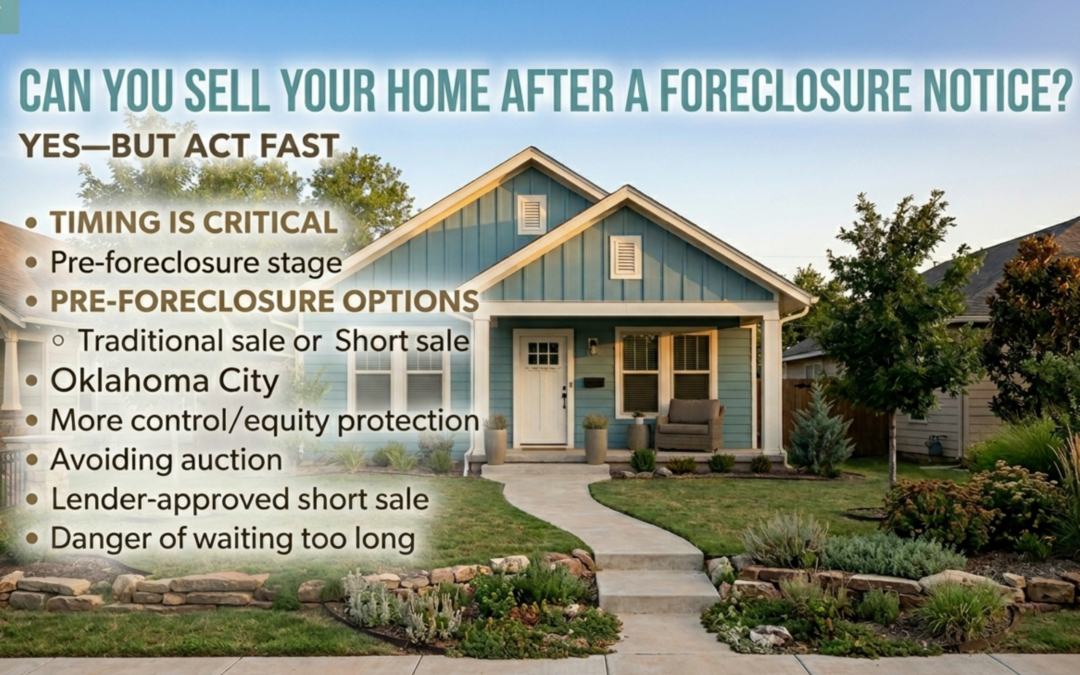
Yes—you can sell your home after a foreclosure notice has been filed in Oklahoma, but timing is critical. During the pre-foreclosure stage, homeowners in Oklahoma City still have options like a traditional sale or short sale, depending on equity. The sooner you act, the more control you have over pricing, equity protection, and avoiding auction. If you owe more than the home is worth, a lender-approved short sale may be the best path. Waiting too long can significantly reduce or eliminate your financial options.
If you’re asking “Can You Sell Your Home After a Foreclosure Notice Has Been Filed in Oklahoma?” the short answer is yes—but timing is everything. Once a foreclosure notice is filed in Oklahoma, homeowners still have options to sell, but the window to act strategically becomes much smaller. Fortunately, in markets like Oklahoma City, many homeowners in pre-foreclosure are still able to protect their equity or avoid foreclosure entirely with the right approach.
Understanding your options early can make the difference between walking away with proceeds or losing your home at auction.
What Happens After a Foreclosure Notice Is Filed in Oklahoma?
Once a lender files a foreclosure notice, the home enters the pre-foreclosure stage. During this time:
- The lender has officially started legal proceedings
- The homeowner still owns the property
- You can still sell the home before auction
- Communication with the lender becomes critical
In Oklahoma, foreclosure timelines can move quickly compared to other states, which is why acting early is essential.
Pre-Foreclosure Selling Options
Even after a foreclosure notice is filed, you typically have several selling paths:
1. Traditional Sale
If there is enough equity in the home, a traditional sale is often the best option. You list the property, attract buyers, and use the proceeds to pay off the loan before the foreclosure completes.
Best for: Homes with positive equity and enough time before auction.
2. Pre-Foreclosure Sale
This is a time-sensitive sale where you market the home quickly while the foreclosure process is active. Pricing competitively becomes critical here.
Best for: Homeowners who need a fast sale but still have equity.
3. Short Sale
If the home is worth less than what is owed, the lender may approve a short sale.
- The lender agrees to accept less than the full payoff
- Requires lender approval
- Can prevent foreclosure from hitting your credit as severely
Best for: Homes underwater on the mortgage.
How Timing Affects Your Equity
Timing is one of the most important factors after a foreclosure notice is filed.
Early stage (right after notice):
- Highest chance of preserving equity
- More buyer interest and negotiation power
Mid stage:
- Reduced pricing flexibility
- Fewer financing options for buyers
Late stage (close to auction):
- Limited control over sale price
- Increased risk of forced foreclosure sale
In short, the longer you wait, the more equity you risk losing.
Working With the Lender During This Stage
Communication with your lender is not optional—it’s strategic.
You or your agent may be able to:
- Request a short sale package
- Negotiate a forbearance or repayment plan
- Ask for a postponement of foreclosure auction
- Provide proof of active marketing efforts
Lenders are often more flexible when they see a realistic plan to resolve the debt.
Short Sale vs Traditional Sale at This Point
At the pre-foreclosure stage, the choice between a short sale and traditional sale depends on your loan balance and market value.
Traditional Sale
- You control pricing and negotiation
- Faster closing process
- No lender approval needed (if equity exists)
Short Sale
- Requires lender approval
- Longer timeline due to review process
- Protects you from full foreclosure impact
- Often the only option when underwater
A Common Question: Should You Modify the Loan Instead?
Many homeowners also consider loan modification vs. selling the home.
- A loan modification adjusts your payment terms to keep the home
- A sale (traditional or short) resolves the debt entirely
If affordability is the issue long-term, selling often provides a cleaner financial reset. If hardship is temporary, modification may be worth exploring first.
When It’s Too Late to Sell
You may still sell your home until the foreclosure auction is finalized. However, once the property is sold at auction:
- You lose ownership immediately
- You cannot control the sale price
- Any remaining debt may still be owed
This is why acting before the auction date is critical.
Final Thoughts
So, can you sell your home after a foreclosure notice has been filed in Oklahoma? Yes—but the strategy you choose matters just as much as the decision to sell.
Whether it’s a traditional sale, pre-foreclosure listing, or short sale, the key is acting early, understanding your equity position, and communicating with your lender as soon as possible.
If you’re facing this situation in Oklahoma City, the right guidance can help you protect your financial future and avoid foreclosure’s long-term impact.